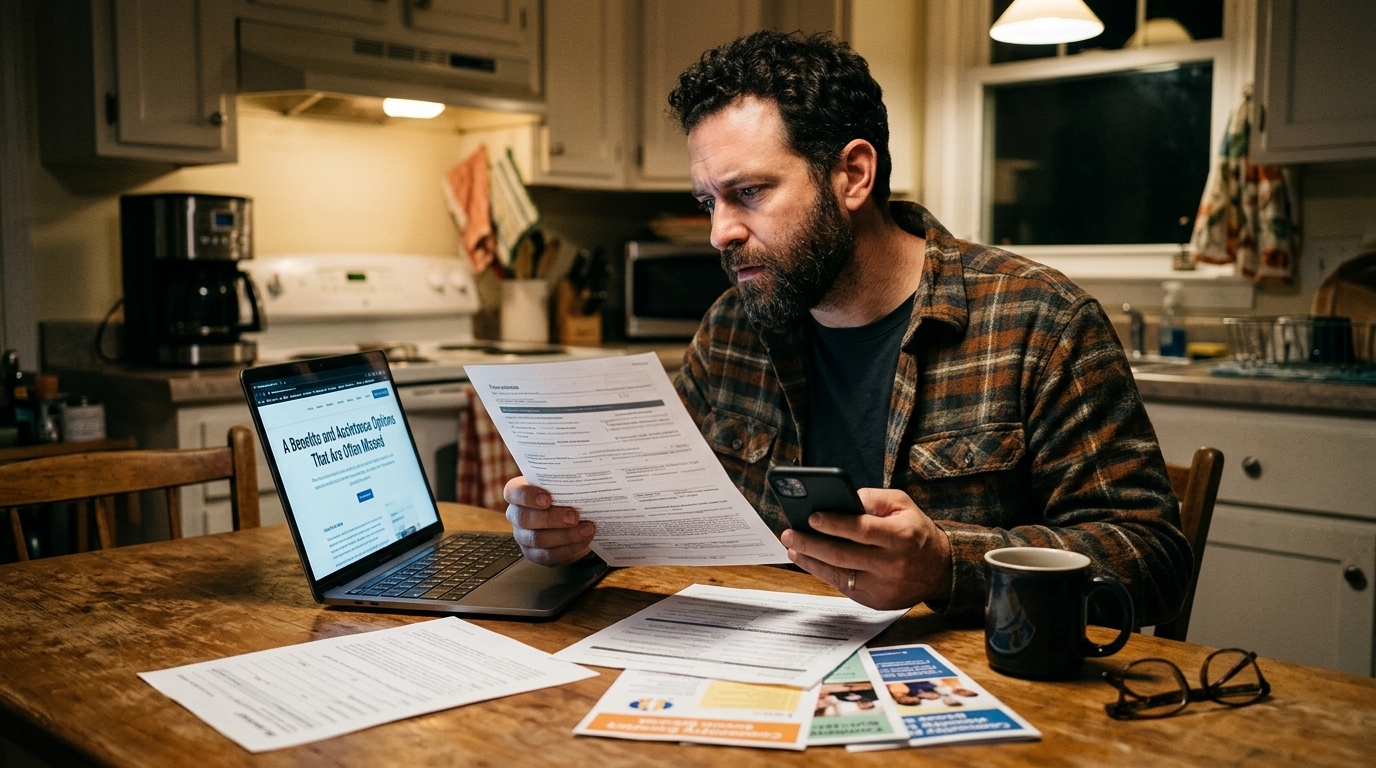
A lot of people miss useful financial help not because nothing exists, but because they only search for the most obvious programs.
They may check one or two well-known benefits, decide they do not qualify, and stop there. In reality, some of the most practical support is often tucked inside categories people forget to look at, such as utility assistance, children’s health coverage, rental help for specific groups, housing counseling, child care support, and local referrals through 211. Official starting points like USAGov, Benefits.gov, HUD, and Medicaid.gov make it clear that financial help is broader than many households expect.
That is why this article focuses on financial benefits people overlook. Instead of treating assistance like one all-or-nothing category, this guide walks through the kinds of support people commonly miss, why they get overlooked, where to check them officially, and how to do a more complete review of what may be available in your area.
In this article, you’ll learn:
Why Some Financial Benefits Get Overlooked
The biggest reason people miss support is that they search too narrowly.
Many people only look for direct cash assistance. If they do not find a match, they assume there is nothing else worth checking. But official benefit directories show that support can also come through reduced utility bills, food assistance, health coverage, rental subsidies, weatherization help, child care support, and specialized help for seniors, veterans, people with disabilities, and families with children.
Another reason is that many programs are state-run or locally administered. A person may search broadly online, miss the local version, and assume the help does not exist. USAGov’s state social services directory and HUD’s Public Housing Agency contacts exist because many answers depend on where you live.
Common U.S. Financial Benefits People Often Miss
Below are some of the most commonly overlooked categories of help, along with official places to check them.
1. Utility bill help through LIHEAP
One of the most overlooked benefits is help with heating and cooling bills. The Low Income Home Energy Assistance Program (LIHEAP) can help eligible households pay heating or cooling costs and may also help during energy emergencies. Benefits.gov specifically points readers to LIHEAP as a major source of utility help, and notes that each state and territory has its own rules.
Official starting point: Benefits.gov energy bill help
Official link: https://www.benefits.gov/benefit/623
2. Weatherization help that lowers bills long term
People often search for help paying a bill now, but miss programs that reduce future bills. The Weatherization Assistance Program (WAP) helps eligible households improve home energy efficiency, which can lower ongoing energy costs. Benefits.gov lists WAP alongside LIHEAP and notes that some households may qualify automatically through programs like TANF or SSI.
Official link: https://www.benefits.gov/benefit/623
3. CHIP for children who do not qualify for Medicaid
Some families assume that if their children do not qualify for Medicaid, there is no affordable public coverage option. That is not always true. CHIP, the Children’s Health Insurance Program, covers uninsured children in families with incomes too high for Medicaid but too low to comfortably afford private coverage, and eligibility levels vary by state.
Official links:
https://www.medicaid.gov/chip/chip-eligibility-enrollment
https://www.medicaid.gov/state-overviews/state-profiles
4. Rental help for seniors, veterans, and people with disabilities
Many people know about Section 8 in general, but do not realize there are also specific rental-help pathways for seniors, veterans, and people with disabilities. USAGov and Benefits.gov both point to government-backed rental assistance options for these groups.
Official links:
https://www.usa.gov/rent-help-groups
https://www.benefits.gov/benefit/5892
5. Housing Choice Vouchers and Public Housing
Some households overlook housing help because they assume the waitlists are too long or the system is too complicated. But HUD still describes the Housing Choice Voucher Program as the federal government’s major rental-assistance program, and it also maintains public housing options through local agencies.
Official links:
https://www.hud.gov/helping-americans/housing-choice-vouchers
https://www.hud.gov/contactus/public-housing-contacts
6. HUD-approved housing counseling
This is one of the most overlooked forms of help because it is not usually described as a “benefit.” HUD’s housing counseling network helps people with renting, buying, foreclosure avoidance, and housing stability. For people overwhelmed by housing questions, this can be one of the most practical next steps.
Official links:
https://www.hud.gov/counseling
https://www.hud.gov/stat/sfh/housing-counseling
7. Emergency rent help through 211 and local agencies
People often search only for national rent programs and miss emergency local help. USAGov says people can contact 211 to find emergency help paying rent, and that states and local agencies may refer people to community or nonprofit organizations even if they do not qualify for a government program.
Official links:
https://www.usa.gov/emergency-pay-rent
https://www.211.org/
8. Head Start and child care assistance
Families sometimes search for “cash help” while missing support that reduces one of their biggest monthly costs: child care. USAGov says families with low income may be able to access child care vouchers, scholarships, and related state and local help, and that Head Start and Early Head Start provide free early learning and development services for eligible children.
Official link: https://www.usa.gov/child-care-head-start
9. SSI and SSDI differences
People living with health conditions or disabilities sometimes check only one disability-related benefit and stop there. But SSI and SSDI are not the same. USAGov explains that Social Security includes retirement benefits, SSDI, SSI, and survivor-related benefits, and each has different qualification rules. That means some households miss help simply because they checked the wrong program first.
Official link: https://www.usa.gov/what-is-social-security
10. Local help through state social services and 211
One of the most overlooked resources is not a single benefit at all. It is the state social service agency or 211 referral system. USAGov’s state social service directory points people to agencies for food, housing, unemployment, adult care, and more, while 211 connects callers and online users to local health and human services. These are often the best options when someone does not know which exact program name to search.
Official links:
https://www.usa.gov/state-social-services
https://www.211.org/
Once people realize how much support sits outside the most obvious programs, the next useful question is usually how to search more completely without missing things again. If that is where you are heading, read How to Check for Available Benefits Without Guesswork next. It gives you a cleaner system for checking categories, sources, and next steps without relying on random searches.
Official Sites and Directories to Check
A more complete benefit search usually starts with a small set of reliable sources instead of dozens of random sites.
The strongest official U.S. starting points are:
- USAGov Benefits / Benefit Finder for broad federal and state benefit categories
- Benefits.gov for searchable federal and state program listings
- HUD for housing vouchers, public housing, housing counseling, and local housing contacts
- Medicaid.gov for Medicaid and CHIP information by state
- USAGov Social Security pages for SSI, SSDI, and related benefits
- 211 for local referrals and nearby services
A good way to use these is to begin broad, then narrow by need and location. That is an inference based on how these official tools are structured and cross-reference one another.
How to Search More Thoroughly by Need
A simple way to find overlooked benefits is to search by your biggest expense or pressure point, not by the word “benefits.”
For example:
- If groceries are the issue, check food assistance and children’s coverage.
- If utility bills are the issue, check LIHEAP and WAP.
- If rent is the issue, check HUD, emergency rent help, and 211.
- If health coverage is the issue, check Medicaid, CHIP, Medicare, SSI, or SSDI depending on your situation.
- If child care is the issue, check Head Start and state child care assistance.
- If the situation is hard to categorize, start with USAGov’s Benefit Finder or state social services.
This works better because many overlooked programs are hidden inside categories people do not initially think to check.
What to Prepare Before Applying
Once you find a possible benefit, the next step is usually documentation.
The exact requirements vary by program and state, but many programs ask for some combination of:
- proof of identity
- proof of address
- proof of income
- household size information
- age information for children or seniors
- documentation tied to disability, pregnancy, work history, or caregiving where relevant
State-run programs like Medicaid, CHIP, TANF, LIHEAP, and many rental programs often require local follow-up, which is why having your basic records ready can make the process much smoother. This is a grounded inference based on the official state-administered structure described across these sources.
How to Avoid Scams or Dead Ends
One reason people get discouraged is that the internet is full of vague promises and low-trust sites.
The safest approach is to verify any program through an official source before sharing personal information. USAGov explicitly warns that the government does not offer “free money” for personal needs and that “free money” offers are often scams. It also advises people to use official government benefits resources and to report scams to the FTC.
A practical rule is this: if a site promises guaranteed money, rushes you to act, or does not clearly explain which agency runs the program, pause and verify it through USAGov, Benefits.gov, HUD, Medicaid.gov, SSA, or your state agency first.
FAQs About Overlooked Financial Benefits
Why do people miss benefits that could help them?
Usually because they search too narrowly, focus only on cash aid, or never get to the local/state layer where many programs are actually administered.
What are some of the most overlooked categories?
Utility help, children’s health coverage through CHIP, housing counseling, emergency local referrals through 211, rental help for specific groups, and weatherization assistance are among the most commonly overlooked.
What if I already checked one program and did not qualify?
That does not mean there is nothing else available. Many programs have different rules, and some are local rather than national.
Where should I start if I do not know the right program name?
Start with USAGov Benefit Finder, Benefits.gov, your state social service agency, or 211. Those are designed to help people who do not already know the exact benefit name.
Final Thoughts
The phrase financial benefits people overlook usually points to one simple truth: the first search is rarely the complete search.
A lot of support is easy to miss because it is local, category-specific, or described in a way that does not immediately sound like “financial help.” That is why it helps to look beyond the most obvious programs and check the full range of options: utility assistance, weatherization, CHIP, rental help for specific groups, housing counseling, emergency local referrals, child care help, SSI, SSDI, and state social services.
A practical next step is to pick one current need, check one official source, and build from there. That is usually how overlooked help stops being overlooked.
Related Articles
If you want to learn more about financial support and financial benefits, check out these articles:
- How to Check for Available Benefits Without Guesswork
Best next step if you want a cleaner process for checking benefits without relying on scattered searches. - A Simple Way to Check Available Financial Benefits in Your Area
Best if you want to take these overlooked categories and turn them into a more local, actionable search. - Where to Find Verified Financial Support Programs Safely
Best if you want to make sure the programs and sources you find are legitimate before you apply.