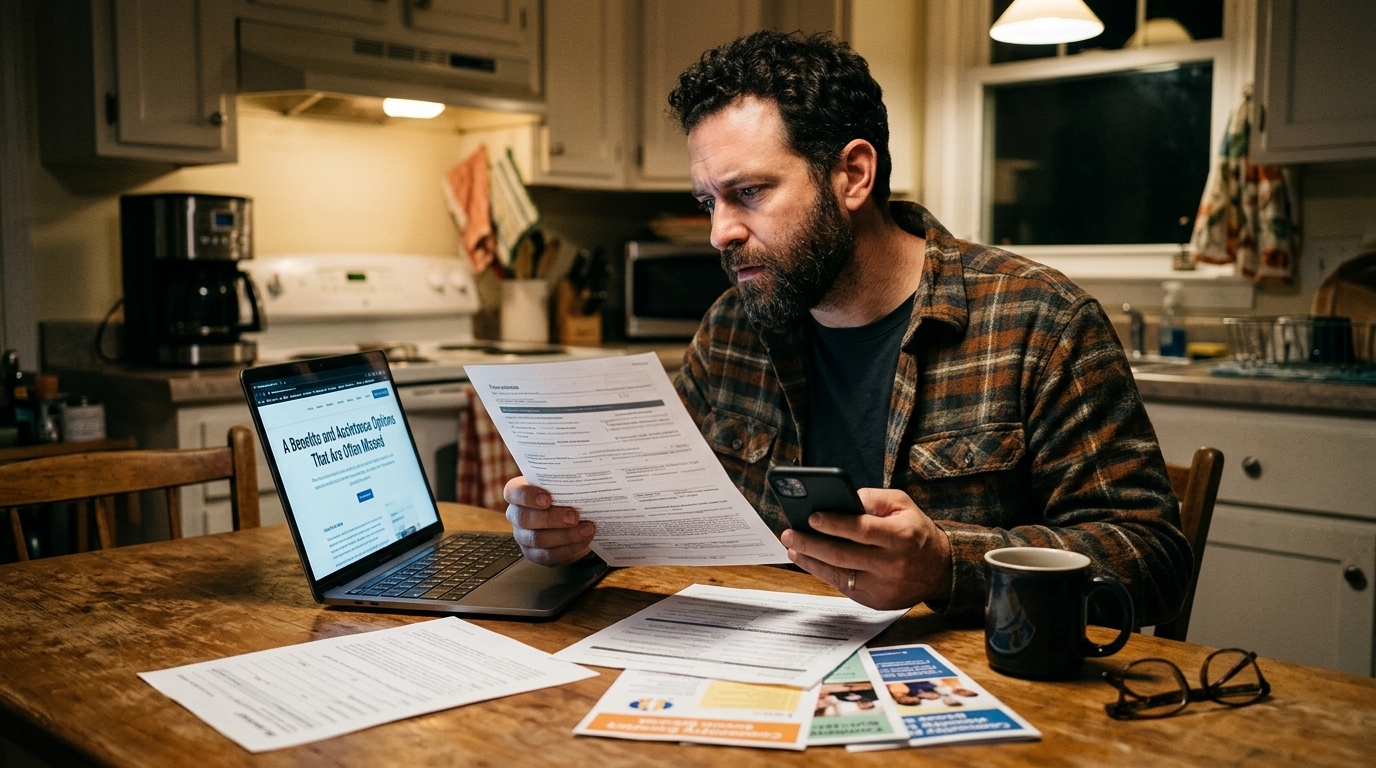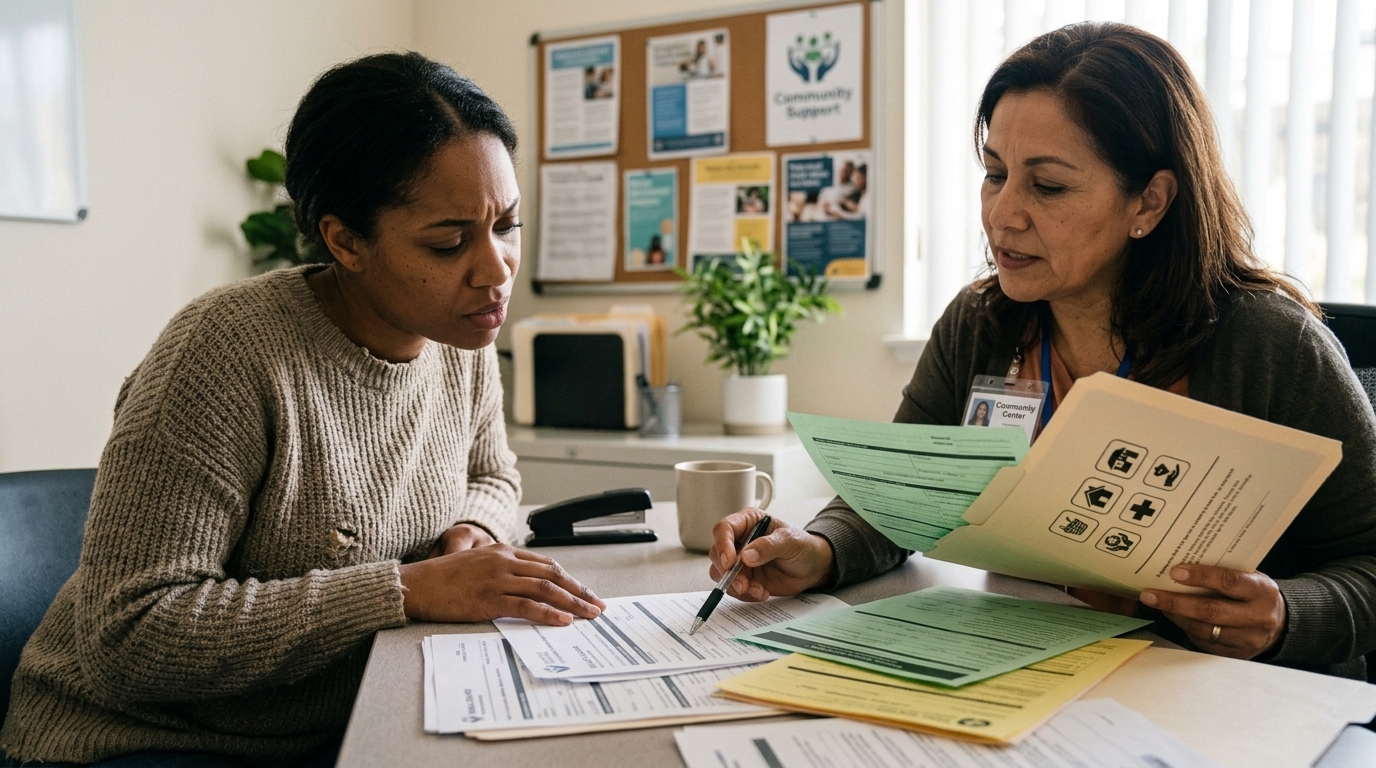
Trying to figure out how to check financial benefits in your area can feel harder than it should be.
Most people do not get stuck because there is no help. They get stuck because they do not know where to begin, which site to trust, or what to search for first. The good news is that there is a much simpler way to do it: start with a few official tools, narrow the search by need, and then follow up locally. USAGov’s benefits pages, Benefits.gov’s Benefit Finder, and 211’s local help directory are three of the strongest starting points in the U.S. for that process.
This guide breaks the process into practical steps so you can check what may be available near you without feeling overwhelmed. It covers why benefits vary by location, where to look first, which online tools can help, how to search by category, what information you will usually need, and what to do after you find something promising.
Why Financial Benefits Vary by Location
Financial benefits are not always the same from one place to another. Some programs are federal, but many are administered by states, counties, cities, local housing agencies, or community organizations. That means eligibility rules, application steps, waitlists, and available services can vary depending on where you live. USAGov’s state social services directory exists for exactly this reason: many benefit programs are state-based and need local follow-up. HUD also directs people to their local Public Housing Agency for housing choice vouchers and public housing information.
This is why a general search like “help with bills” often feels frustrating. It is too broad, and it skips the local layer where many of the actual answers live. A better approach is to start with official benefit finders, then move into your state or local agency pages once you know which category fits your situation.
The Easiest Starting Points to Check Benefits Near You
The simplest way to start is with three broad entry points:
1. USAGov Benefit Finder
USAGov says you can use its benefit finder tool or browse by category to learn which government benefits you and your family may be eligible for and how to apply. This is one of the best first stops if you are not sure what category of help applies to you.
2. Benefits.gov
Benefits.gov also offers a benefit finder and category-based search. It is useful when you want a broad, official database of federal and state benefit programs in one place.
3. State social service agencies
USAGov’s state social services directory points people to state agencies for food, housing, unemployment benefits, child support, adult care, Medicare-related help, and more. Once you know your category, this is often the most practical next step.
A fourth strong option is 211. United Way 211 says people can call 211 or search by location to get help paying bills, finding food, locating housing and utility resources, and other local services. That makes it especially useful when you need nearby community-based help, not just large government programs.
Online Tools and Directories That List Local Programs
If you want a simple local lookup process, these are the most useful tools to check:
USAGov Benefits
USAGov’s benefits hub lets you search by major categories like food assistance, health insurance, welfare and cash assistance, and more. It is a strong starting point when you need a high-level map of what kinds of support exist.
Benefits.gov
Benefits.gov is especially useful when you want to move from a broad search into specific program pages. For example, its energy-bill help page explains LIHEAP and weatherization help, while other pages cover employment, disability, and family-related support.
211 Local Help
211 is one of the best tools for nearby practical support. It allows people to search by location and category, and it also offers phone-based help. United Way says 211 connects people to essential local health and human services and is free and confidential.
HUD local housing resources
If your main concern is rent, housing stability, public housing, or Section 8, HUD’s local tools are worth checking directly. HUD provides a Public Housing Agency directory and a Housing Counseling search so people can find local housing help by state or ZIP code.
Using these tools together works well: start broad with USAGov or Benefits.gov, then move local with your state agency, 211, or HUD resources depending on the type of help you need. That workflow is an inference based on how these official tools are structured.
If you are still trying to decide which type of program actually fits your situation before you start searching locally, read A Practical Guide to Finding Assistance Programs That Fit Your Situation next. It will help you narrow the field before you begin clicking through local options.
How to Search for Benefits by Category or Need
One of the easiest ways to reduce overwhelm is to stop searching for “financial help” in general and instead search by your biggest current need.
For example, you might search for:
- food assistance
- rent or housing help
- utility bill help
- health coverage
- child care support
- disability-related assistance
- job training or employment support
USAGov organizes benefits by category, including food assistance, health insurance, and welfare or TANF. Benefits.gov also has category-specific pages, including help with energy bills and job training. This is why category-first searching usually works better than vague terms like “money help near me.”
A practical example looks like this:
- If you need help with groceries, start with USAGov Food Assistance.
- If you need help with heating or cooling bills, check Benefits.gov Energy Bill Help.
- If you need housing support, check HUD Public Housing Agency contacts and HUD Housing Counseling.
- If you are not sure what category fits, begin with USAGov Benefit Finder or Benefits.gov.
- If you need nearby community help fast, use 211 or search your local 211 by ZIP code.
The most effective sequence is usually: need first, category second, location third. That is an inference, but it follows how these official tools direct users.
What Information You’ll Typically Need to Check Eligibility
Most benefit tools and local agencies will ask for a few basics before they can tell you whether a program may fit.
Common information includes:
- your ZIP code or location
- household size
- approximate income
- age of household members
- employment status
- housing situation
- whether anyone in the household has a disability, is pregnant, or needs child care
USAGov’s Benefit Finder says it asks basic questions to generate a customized list of potential benefits. State agencies and local programs often require more detailed follow-up after that first screening.
When you move from “checking” to “applying,” you may also need documents such as ID, proof of address, pay stubs, benefit statements, lease information, utility bills, or records tied to a special circumstance. That document list varies by program, but it is consistent with the way state-run and local benefit systems described on USAGov, HUD, and Benefits.gov typically work. This is a grounded inference rather than a single-source checklist.
How to Follow Up Once You’ve Found a Potential Benefit
Finding a possible program is only the first step. The next step is making sure it is relevant, legitimate, and still active in your area.
A practical follow-up process looks like this:
1. Go to the official source
If you found a program through a blog, ad, or third-party site, verify it on an official government or trusted nonprofit page before you do anything else. USAGov’s benefits pages and agency directories are the safest place to confirm details.
2. Check whether the program is local, state, or federal
Some help is national, but many programs are handled locally. HUD says housing assistance questions should go to the local Public Housing Agency, and USAGov says state social service agencies handle many state benefit programs.
3. Write down what the program helps with
Keep a short list with the program name, what it covers, where to apply, and any local contact information. This sounds simple, but it helps prevent the usual “too many tabs open” problem. This is practical advice based on the multi-step nature of these official search tools.
4. Call or contact the local office if the website is unclear
211 can often help point you to local services, and HUD also provides local housing counseling and local PHA contacts. Sometimes a short phone call is faster than trying to decode a complicated site.
5. Ask what documents are needed before applying
That can save time and reduce delays. Official agency pages often explain the general process, but the local office can usually tell you what they specifically need.
FAQs About Checking Local Financial Benefits
Why does it matter where I live?
Because many benefits are administered by state or local agencies, not just federal ones. That means rules, contacts, and available programs can differ by state, city, or housing authority.
What is the easiest first step?
For most people, the easiest first step is using USAGov Benefit Finder or Benefits.gov. If the need is urgent and local, 211 is one of the quickest ways to find nearby help.
What if I do not know which program name to search for?
Search by your need, not by a program name. Food, utilities, rent, child care, health insurance, and job training are better starting points than trying to guess the exact benefit name. That matches how USAGov and Benefits.gov organize their tools.
Is 211 only for emergencies?
No. United Way 211 says it helps people find essential local services like bill help, food, housing, and caregiver resources, not just emergency crisis support.
What if I find a program but the website is confusing?
Use the official contact listed for the state or local agency, or call 211 for help finding the right local path. HUD also provides local housing contacts and counselors if the issue is housing-related.
Final Thoughts
The simplest way to check available financial benefits in your area is to stop trying to find everything at once.
Start with one need. Use one official tool. Narrow by location. Then follow up with the right local office.
For most U.S. readers, that means beginning with USAGov Benefit Finder, Benefits.gov, USAGov State Social Services, and 211. If the issue is housing, add HUD Public Housing Agencies and HUD Housing Counseling to the list. Those are the clearest official starting points for local benefit checking in the U.S. today.
Related Articles
To keep going, here are the best next reads after this one:
- How to Check for Available Benefits Without Guesswork
Best next step if you want a cleaner repeatable method for checking benefits without bouncing between too many tools. - A Practical Guide to Finding Assistance Programs That Fit Your Situation
Best if you want to narrow your options before you start checking local resources one by one. - Where to Find Verified Financial Support Programs Safely
Best if your next concern is making sure the sites and programs you found are legitimate and trustworthy.