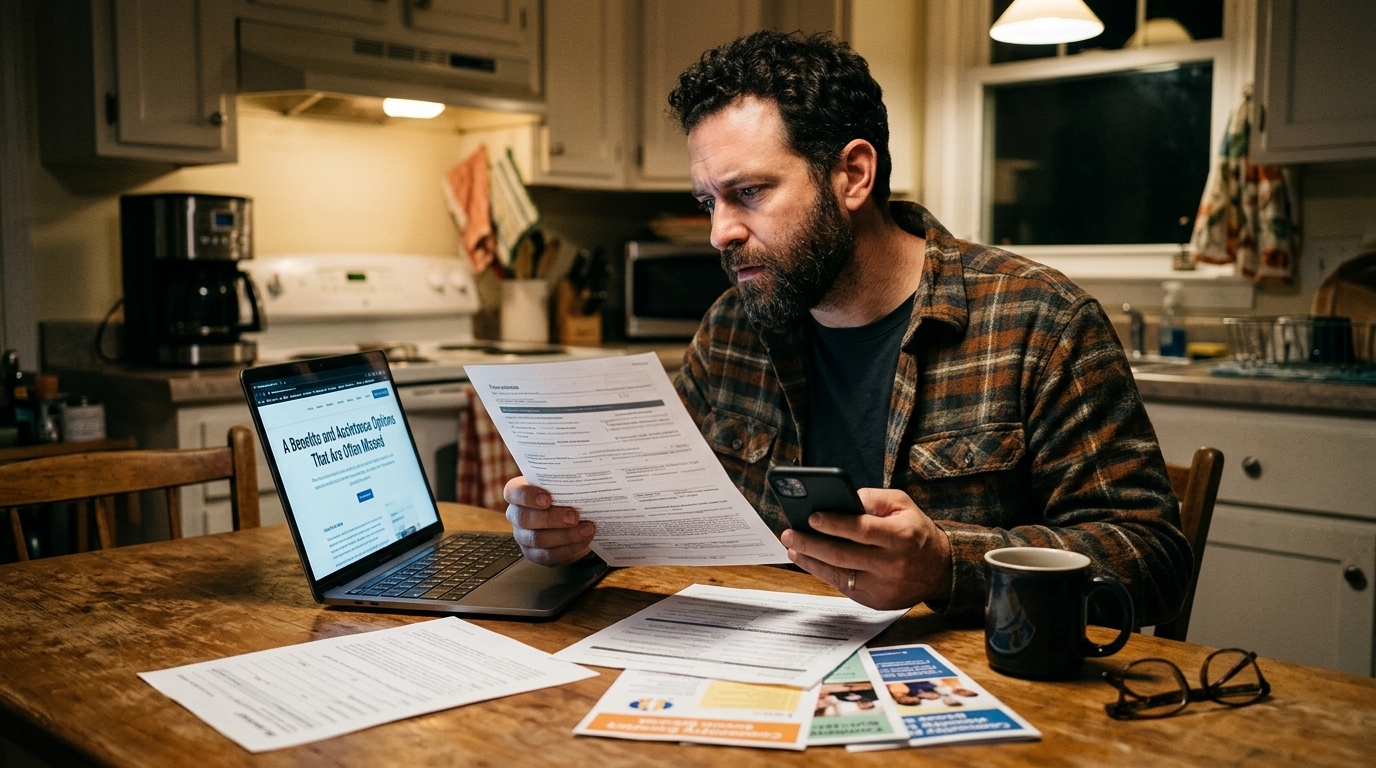
Finding help is one thing. Finding the right help is another.
A lot of people waste time looking through long lists of programs that do not actually match what they need. They may search for “financial help,” click through a few broad pages, feel overwhelmed, and give up. But official U.S. benefit resources are built around a simpler idea: start with your situation, identify the type of need you have, and then narrow to the programs designed for that kind of problem. USAGov’s Benefit Finder, Benefits.gov, state social service agencies, HUD housing resources, and 211 all support that kind of fit-first approach.
That is what this guide is about. Instead of giving you a generic list, it focuses on finding assistance programs that fit your situation. You will learn how to define your current needs, understand what different types of programs are designed for, match your situation to the right category, and narrow your options without getting buried in unnecessary information.
Here, you will discover:
- Why finding the right fit matters more than finding any program
- How to define your current financial needs
- Types of assistance programs and what they’re designed for
- How to match your situation to the right program category
- Where to search for programs based on your needs
- How to narrow down your options effectively
- FAQs about finding the right assistance program
The goal is to help you make more informed decisions, not just collect more links. A program is only useful if it matches the kind of help you need, the place you live, and the eligibility rules you are actually likely to meet.
Why Finding the Right Fit Matters More Than Finding Any Program
Not all assistance programs solve the same problem.
Some help with groceries. Some reduce utility bills. Some provide health coverage. Some support families with children. Some are designed for seniors, people with disabilities, veterans, students, or workers dealing with unemployment or reduced income. USAGov’s benefits pages and Benefits.gov both organize assistance by need and life situation because program fit matters more than the simple fact that help exists.
That means the best question is usually not, “What help can I find?” It is, “What type of help matches the pressure point I’m dealing with right now?” If your main problem is rent, food programs will not solve it. If your biggest issue is health coverage, housing lists may not be the best first stop. Matching the problem to the program saves time and reduces frustration. That is an inference, but it follows directly from the way official benefit tools are organized by category and life event.
Fit also matters because many programs are local or state-administered. A program that looks relevant in general may still not be available in your area, or it may be handled through a local office with different steps. That is why state social service agencies, Public Housing Agencies, and 211 are often more useful than broad searches alone once you know your category.
How to Define Your Current Financial Needs
The easiest way to get clearer is to stop thinking in terms of “I need help” and start thinking in terms of what exactly is hardest to cover right now.
A practical first step is to identify your biggest current strain. For example, is the real issue food, rent, utilities, medical coverage, child care, transportation, disability-related costs, or reduced income from work changes? Official tools like USAGov’s Benefit Finder ask basic questions about life events and circumstances for exactly this reason: they are trying to sort people into the types of help most relevant to their situation.
It can also help to think in terms of categories like:
- daily essentials
- housing stability
- healthcare access
- family and child-related costs
- disability or senior support
- employment or training help
- emergency local help
Those categories closely match the way USAGov, Benefits.gov, and 211 structure their directories.
If more than one area is difficult, start with the one causing the most pressure right now. That may sound simple, but it usually works better than trying to solve everything at once. A focused search tends to produce clearer results than a broad one. This is a practical inference based on how these official sites are designed for category-based lookup.
Types of Assistance Programs and What They're Designed For
A big part of finding the right fit is understanding what each major program category is for.
Food assistance
Food-related programs are designed to help households afford groceries and basic nutrition. USAGov’s food assistance page points people to SNAP, WIC, and emergency food assistance, which makes this one of the clearest categories for households struggling with grocery costs.
Official link: https://www.usa.gov/food-help
Housing assistance
Housing programs are designed to help with rent, housing stability, public housing, vouchers, and housing counseling. HUD’s housing resources and local Public Housing Agency contacts are especially important if your situation involves rent burden, risk of losing housing, or confusion about housing options.
Official links:
https://www.hud.gov/counseling
https://www.hud.gov/contactus/public-housing-contacts
Utility and bill help
If heating, cooling, electricity, or utilities are the main problem, utility assistance is usually a better category than general cash help. 211 specifically offers local pathways for bill help and utilities, and Benefits.gov points to energy assistance programs like LIHEAP-related help.
Official links:
https://www.211.org/get-help/utilities-expenses
https://www.benefits.gov/benefit/623
Health coverage and disability-related help
If the pressure point is medical coverage, disability, or inability to work, then programs tied to Medicaid, CHIP, SSDI, or SSI may be more relevant than general assistance searches. USAGov and Medicaid-related resources direct people toward these categories based on disability, income, family size, and work history.
Official links:
https://www.usa.gov/social-security-disability
https://www.medicaid.gov/
Family, child care, and early education help
If child care costs, parenting expenses, or early-childhood support are the issue, then family-focused programs are the better fit. USAGov and Benefits.gov include child care and family-oriented benefit paths for that reason. FAFSA can also matter if the situation involves education or career school funding.
Official links:
https://www.usa.gov/child-care-head-start
https://www.benefits.gov/benefit/4426
Local emergency and referral support
If you are not sure which category fits, or if the need is urgent and local, 211 is often one of the best starting points. United Way 211 says it helps with bills, housing, food, caregiver resources, and other local services through direct local connections.
Official link: https://www.211.org/
Once you understand these categories, the next challenge is often figuring out whether you actually qualify for the options that seem like a fit. If that is your next question, read How to Review If You’re Eligible for Financial Support Programs next. It will help you move from “this sounds relevant” to a clearer self-assessment of whether it is worth pursuing.Before reviewing eligibility, it helps to gather a few basics. In most cases, that means your approximate household income, number of people in the household, ages of household members, employment situation, and whether there are factors like disability, pregnancy, or retirement involved. This matches the way official tools ask “basic questions” to screen for possible benefits.
For some programs, you may also need to think about resources or assets, especially for SSI, which considers limited income and limited resources as part of eligibility.
You do not need perfect paperwork for a first-pass self-check, but you do need a reasonably clear picture of your situation. That makes the screening process much more useful than guessing. This is an inference based on how the official screening tools are structured.
Once you get to this stage, a lot of people realize they also need a better way to judge whether a program is even worth pursuing in the first place. If that is your next question, read
next. It will help you evaluate fit, legitimacy, and practical value before you spend more time on an application.
How to Match Your Situation to the Right Program Category
A useful way to do this is to translate your situation into the type of help it actually requires.
For example:
- “I cannot keep up with groceries” usually points to food assistance.
- “I’m behind on rent or worried about housing” usually points to housing help or 211 local housing resources.
- “My utility bills are getting unmanageable” usually points to energy or utility assistance.
- “I lost work hours or cannot work because of a condition” may point to state benefits, disability support, or employment-related help.
- “I need health coverage for myself or my kids” points to Medicaid, CHIP, Medicare, or disability-related benefit screening.
This matching process matters because different programs are built for different outcomes. The category is not just a label. It tells you what kind of problem the program is meant to solve. That is why USAGov, Benefits.gov, and 211 all separate support by need rather than presenting one giant undifferentiated list.
If your situation spans more than one category, that is normal. For example, a household facing reduced income might need food help, utility help, and housing referrals at the same time. In that case, it often makes sense to start with the most urgent category and then branch out. That prioritization is an inference, but it fits how people are guided through these official tools.
Where to Search for Programs Based on Your Needs
Once you know the category, the search gets much easier.
Start broad with an official benefit finder
USAGov’s Benefit Finder and Benefits.gov are strong first steps if you want to screen multiple possibilities based on life situation and basic circumstances. They are especially useful if you know your general problem but not the exact program name.
Official links:
https://www.usa.gov/benefit-finder
https://www.benefits.gov/
Use state social service agencies for state-run help
If the likely fit is food, state benefits, child support, adult care, or unemployment-related support, your state social service agency is often the next practical stop. USAGov’s state directory is built for this purpose.
Official link: https://www.usa.gov/state-social-services
Use HUD for housing-related needs
If the fit is clearly housing, HUD resources are usually more useful than general searches. HUD lets people find housing counseling agencies by ZIP code or state, and it directs current assisted residents and applicants toward local Public Housing Agencies.
Official links:
https://www.hud.gov/counseling
https://www.hud.gov/contactus/public-housing-contacts
Use 211 for nearby local help
If the need is local, urgent, or hard to categorize, 211 can be a strong shortcut. United Way says you can call 211 or search by location for local programs, and its site specifically includes pathways for bills, housing, utilities, food, and caregiver resources.
Official link: https://www.211.org/
The best sequence is usually: identify the need, choose the category, then use the matching official search path.That is an inference, but it is strongly supported by how these official directories are set up.
How to Narrow Down Your Options Effectively
Once you have a few possible options, the next step is not to apply to everything. It is to narrow the list.
A simple way to do that is to compare each option using the same questions:
- Does this solve the exact problem I have right now?
- Is it federal, state, or local?
- Do I seem to fit the main eligibility group?
- Is it active where I live?
- Does it require local follow-up?
- Do I have the basic information needed to check or apply?
These are not official application questions, but they mirror the way benefit tools and agency pages organize program information.
It also helps to narrow by urgency. If rent or food is the immediate crisis, those categories usually come before longer-term possibilities like training or broader planning help. 211’s local bill, housing, and food pathways are especially useful when urgency matters.
Finally, keep the search grounded in official sources. If you find a program mentioned on a third-party site, confirm it through USAGov, Benefits.gov, HUD, or the relevant agency before sharing personal information. That reduces wasted time and lowers scam risk.
FAQs About Finding the Right Assistance Program
Why does “fit” matter so much?
Because assistance programs are designed for different needs and different groups. A program can be legitimate and still be the wrong match for your current problem. Official benefit tools are built around this idea of matching by need and life situation.
What if I do not know the program name?
That is common. Start with the type of problem you need help with, then use USAGov Benefit Finder, Benefits.gov, or 211 to narrow the possibilities.
Should I start with national programs or local help?
It depends on the situation. For broad screening, national tools are helpful. For urgent or location-specific needs, local and state resources often matter more. State social service agencies, HUD local contacts, and 211 are especially useful for that second step.
What if more than one category fits my situation?
That is normal. Start with the category causing the most pressure right now, then work outward. A household may need support in food, utilities, housing, and health at the same time.
Final Thoughts
Finding assistance programs that fit your situation is usually not about finding more information. It is about finding more relevant information.
The most practical path is to start with your real need, match it to the right category, and use the official tool built for that type of help. For most U.S. readers, that means beginning with USAGov Benefit Finder or Benefits.gov, then moving to state social service agencies, HUD housing resources, or 211 depending on the category. Those are the strongest official starting points for turning a vague search into a more tailored one.
The best next step is simple: define your biggest current need in one sentence, then use that to guide the first search. That usually leads to a better fit than starting with a giant list of programs.
Related Articles
If you want to learn more about financial support and financial benefits, check out these articles:
- How to Review If You’re Eligible for Financial Support Programs
Best next step if you want to test whether the programs that seem relevant are actually worth pursuing. - A Simple Way to Check Available Financial Benefits in Your Area
Best if you want to turn your chosen category into a local search process with official tools and local follow-up. - What to Look For When Checking Financial Support Options
Best if you want to compare programs more carefully before deciding where to spend your time and effort.