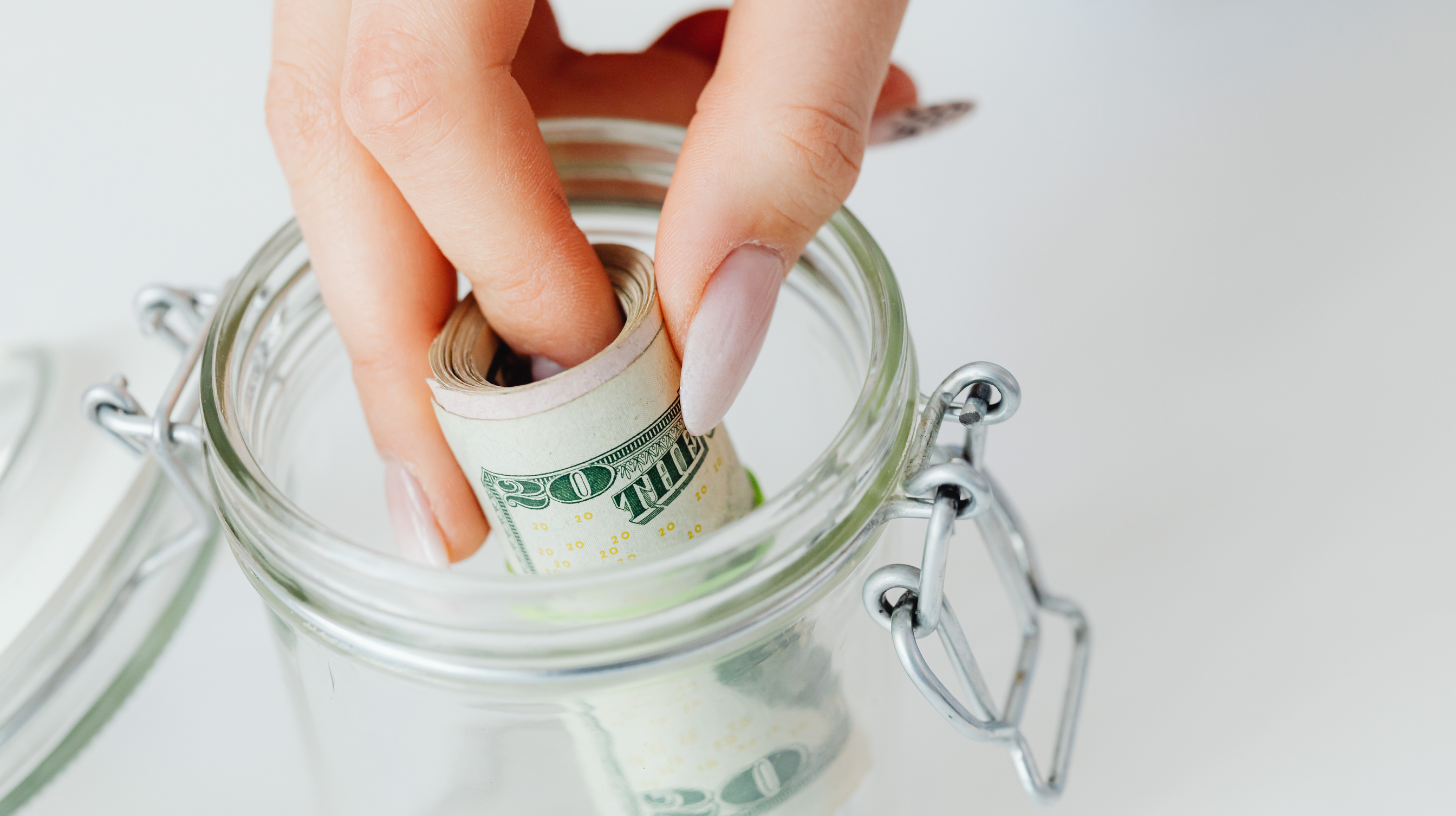
Impulse spending is one of the most discussed and least understood personal finance challenges. It is discussed frequently because almost everyone experiences it and most people suspect it is costing them more than they would choose if they were being deliberate. It is misunderstood because it is usually framed as a willpower problem — a character flaw to be overcome through discipline — rather than what the behavioral science actually shows it to be: a predictable response to environmental cues and psychological states that affects virtually everyone to some degree.
Understanding impulse spending from a psychological rather than a moralistic perspective is what makes it actually manageable. When you understand why an impulse purchase happens, you can identify the conditions that produce it and work with those conditions rather than simply trying to resist them through ongoing willpower expenditure — a strategy that research consistently shows to be unstable and exhausting.
This guide covers the psychological mechanisms behind impulse spending, the specific triggers that most commonly produce it, how to identify your own patterns, and practical approaches that reduce unplanned spending without turning every purchase into a struggle. It also addresses something that standard impulse spending advice often ignores: how to build deliberate spending flexibility into your budget so that not every unplanned purchase creates a conflict.
TABLE OF CONTENTS
- What Impulse Spending Is and Why It Happens
- How Impulse Purchases Add Up Over Time
- Common Triggers That Lead to Unplanned Spending
- How to Recognize Your Own Impulse Spending Patterns
- Practical Approaches to Managing Unplanned Purchases
- How to Build Spending Flexibility Without Losing Control
- FAQs About Impulse Spending and Budget Impact
What Impulse Spending Is and Why It Happens
An impulse purchase is a buying decision made without prior planning — one where the intention to buy was formed and acted upon in the same moment, often without deliberate evaluation of whether the purchase fits current spending priorities. What distinguishes an impulse purchase from a spontaneous but sensible one is the absence of consideration: the decision to buy precedes, rather than follows, any meaningful assessment of value, need, or financial fit.
The neuroscience of in-the-moment purchasing
Consumer neuroscience research has documented fairly clearly what happens in the brain during an impulse purchase. The emotional and reward-processing regions of the brain — particularly the nucleus accumbens, associated with anticipation of reward — activate strongly in response to attractive products. These regions operate faster than the prefrontal cortex, which handles deliberate evaluation and self-regulation. In practice, this means that the ‘yes’ response to a desirable item can be nearly instantaneous, while the evaluative response that would moderate it takes a moment longer and requires more cognitive effort.
This is not a flaw unique to people who struggle with impulse control — it is a feature of how human brains process reward. Retailers and marketers invest heavily in understanding and exploiting this dynamic: product presentation, pricing psychology, store layout, and digital interface design are all optimized to activate the reward response before the evaluative one has time to engage. Understanding this doesn’t make impulse purchases inevitable, but it does clarify that resistance requires effort and that the effort can be reduced through environmental design rather than sustained through willpower alone.
The role of emotional state
Emotional state is one of the most consistent predictors of impulse spending. Research across multiple study populations finds that negative emotional states — stress, boredom, loneliness, anxiety, sadness — significantly increase impulse purchasing behavior. This happens because purchasing provides a reliable short-term mood lift: the anticipation of acquiring something new activates the same reward pathways that direct physical pleasures activate. The lift is real, temporary, and often followed by a mild negative affect — the familiar ‘buyer’s remorse’ — that can itself create a emotional state that generates the next impulse purchase.
Positive emotional states also increase impulse spending, though through a different mechanism. When people are in an elevated positive mood — excited, celebratory, or simply feeling good — their tolerance for spending increases, their internal spending limits feel more flexible, and the evaluative checks that would ordinarily moderate a purchase feel less urgent. Both emotional poles increase the likelihood of unplanned spending for different reasons, which is why emotional state awareness is a more consistent predictor of impulse risk than any single trigger.
The availability of frictionless payment
The structural shift from cash to card and then to digital payment has removed one of the most natural moderating forces on spending: the physical experience of exchanging money. Research on payment psychology consistently finds that card payments, particularly contactless payments, feel less ‘real’ than cash payments — the pain of paying is lower, which means the moderation of spending it would otherwise produce is also lower. Stored payment methods in apps and browsers have taken this further, reducing a purchase to a single tap that requires essentially no deliberate action. The frictionless quality of modern payments is commercially designed and psychologically consequential.
A NOTE ON FRAMING
This guide approaches impulse spending as a behavioral pattern to understand and work with, not as a moral failing to eliminate. The goal is not zero unplanned purchases — it is a level of unplanned spending that is intentional rather than accumulated by default. Those are meaningfully different targets, and the second one is both more realistic and more likely to produce lasting change.
How Impulse Purchases Add Up Over Time
The individual amounts involved in impulse spending are typically small enough that each transaction feels inconsequential. The cumulative total over a month or year is typically not small at all — and it is rarely visible because no moment prompts the addition.
The arithmetic of small regular purchases
A useful exercise is to estimate the average daily impulse spending that occurs across the most common categories and project it forward. A household that spends an average of $8 per day on unplanned purchases — a coffee that wasn’t planned, a lunch purchased instead of a brought lunch, a small online purchase, a convenience item added while running an errand — generates $240 per month and $2,920 per year in unplanned spending. At $5 per day the figure is $1,825 annually. At $12 per day it is $4,380.
These are not extreme figures. For many households, a few small unplanned purchases per day is a normal pattern that has never been examined as a category. The reason it hasn’t been examined is that no single transaction is large enough to register as problematic. The $3.50 app purchase, the $7 snack at the checkout, the $15 item added to an online cart — none of these individually prompt a review. Together, they represent one of the largest discretionary spending categories in many household budgets.
Online shopping and the new impulse environment
The shift toward online shopping has dramatically changed the impulse spending landscape. Physical retail has always been designed to encourage unplanned purchases, but it required physical presence. Online retail has extended that environment into every moment a person has a connected device, which for most people is most of the day. A notification from a retailer, an algorithmically surfaced product recommendation, a flash sale email, or a moment of browsing during a period of boredom — all of these create impulse purchasing opportunities that did not exist in a world where impulse spending was limited to physical store visits.
Research on e-commerce purchasing behavior finds that impulse purchases represent a significant and growing share of online transactions, particularly on platforms with one-click or stored-payment purchasing. The average value of online impulse purchases tends to be higher than in-store impulse purchases — not because the mechanism is different, but because online shopping removes the physical size and weight constraints that naturally limit what can be impulsively added to a real cart.
The interaction with savings goals
The budget impact of impulse spending is not only what it costs directly — it is also what it displaces. Every dollar spent on an unplanned purchase is a dollar not contributed to savings, an emergency fund, a debt payment, or a deliberate savings goal. For households working toward specific financial objectives, unplanned spending doesn’t just affect the monthly budget balance; it affects the timeline of goals that matter. A household that wants to build a three-month emergency fund earning $60,000 per year needs to save approximately $1,500 per month to reach that goal in a year. If unplanned spending of $300 per month reduces available savings to $1,200, the same goal takes fifteen months rather than twelve — a delay created by spending that was never deliberately chosen.
DOING THE CALCULATION
If you want to understand the actual impact of impulse spending on your household budget, pull your last three months of statements and categorize any transaction that you did not plan in advance as unplanned spending. Add them up and divide by three for a monthly average. This exercise typically produces a number that is meaningfully larger than most people expect, which is itself useful information regardless of what you decide to do with it.
Common Triggers That Lead to Unplanned Spending
Impulse purchases don’t come from nowhere — they are responses to identifiable triggers. Understanding which triggers are most active for you is more useful than a general awareness that impulse spending exists, because it allows you to anticipate and prepare for high-risk situations rather than being surprised by them repeatedly.
😰 Stress and Emotional Discomfort
Stress is the most consistently documented trigger for impulse spending. When the brain is managing a stressful situation, the reward system’s response to pleasurable stimuli is often heightened — a compensatory mechanism that makes immediate sources of satisfaction more attractive than usual. Shopping, particularly for items associated with comfort or self-care, activates the reward response reliably. This is not irrational behavior — it works in the short term. The issue is that it creates a pattern where financial stress generates spending that increases financial stress, a cycle that maintains itself through the short-term effectiveness of the coping mechanism.
😴 Boredom and Low Stimulation
Boredom is a state of under-arousal that the brain actively seeks to resolve. Shopping — particularly online shopping — provides consistent, variable stimulation that effectively addresses boredom in the short term. The browsing experience itself, before any purchase decision is made, provides the mild pleasure of novelty and the occasional reward of finding something interesting or at a good price. For households where online browsing has become a default boredom-resolution behavior, the purchases that result from this browsing represent spending that is driven by the desire for stimulation rather than any genuine product need.
🛍️ Sales, Promotions, and Scarcity Signals
Promotional pricing creates urgency that compresses the time available for deliberate evaluation. ‘Limited time offer,’ ‘only 3 left,’ ‘ends tonight’ — these signals activate loss aversion, which research shows is a more powerful motivator than the equivalent gain. The fear of missing a good deal often overrides the evaluative question of whether the item was needed in the first place. Sales don’t cause impulse spending; they reliably trigger it in people who are already susceptible, because they add a time pressure that interferes with the deliberation that would otherwise occur.
📱 Notifications and Digital Attention Capture
Marketing notifications — from apps, email, text messages, and social media — interrupt other activities and create purchasing opportunities that wouldn’t have been self-initiated. A notification that says ‘your cart is about to expire’ or ‘items you viewed are 30% off’ reaches you in whatever context you’re currently in, including contexts where you are bored, stressed, or otherwise vulnerable to impulse spending. The average person receives dozens of marketing-related notifications daily. Each one represents a curated attempt to create a purchasing impulse.
👥 Social Comparison and Exposure
Seeing what others are buying, wearing, using, or experiencing — through social media, in person, or through content consumption — activates social comparison processes that can translate into purchasing behavior. The mechanism is not straightforward envy; it is more often an adjustment of reference points. When exposed to products or experiences that others in your social circle or comparison group have, those products and experiences shift from ‘not on my radar’ to ‘something I could reasonably have.’ This shift in what feels normal or aspirational creates purchasing impulses that wouldn’t exist without the exposure.
🎉 Celebration and Reward Mindset
Periods of accomplishment, celebration, or positive milestone — completing a project, receiving good news, surviving a difficult week — often generate a ‘I deserve this’ mindset that loosens spending constraints. This reward-oriented spending is not inherently problematic, but it can become a pattern where any positive occasion becomes a justification for unplanned spending, and the spending becomes associated with the good feeling rather than with a deliberate choice about value. Over time, this pattern makes spending a reflexive response to both positive and negative emotional states, covering most of the emotional spectrum with purchasing opportunities.
🔄 Routine and Habit Patterns
Some impulse spending is so habitual that it barely registers as a decision at all. The coffee shop stop that happens every morning not because you specifically decided to buy coffee today but because your route passes the shop and you always stop. The online checkout that habitually includes a few extra items because browsing while checking out is a default behavior. The convenience item added to the grocery run because you always look at that display. These habitual purchases share an origin with impulse spending — they were once unplanned and then became automatic — but they are maintained by routine rather than by immediate emotional triggers.
How to Recognize Your Own Impulse Spending Patterns
General awareness of impulse spending triggers is useful but insufficient. What actually changes behavior is specific awareness of your own patterns — which triggers activate for you, in what contexts, and with what spending categories. This self-knowledge is more actionable than abstract knowledge about how impulse spending works in general.
Conduct a retroactive spending review
Pull your bank and credit card statements for the past two to three months and identify every transaction that you did not plan in advance. Mark these transactions and sort them by category — food and beverages, clothing, digital purchases, entertainment, impulse convenience items, and so on. Look at the totals in each category and the contexts in which they occurred. Patterns emerge quickly: the time of day when most unplanned digital purchases happen, the emotional contexts that precede spending sprees, the categories where unplanned spending consistently concentrates. This data is more revealing than any general self-assessment.
Track your emotional state around spending
For one to two weeks, pay attention to your emotional state when you make an unplanned purchase or have a strong urge to do so. You don’t need a formal tracking system — a brief note on your phone is sufficient. Over time, patterns emerge: purchases made when stressed tend to be in comfort categories, purchases made when bored tend to be digital or entertainment-related, purchases made during social comparison tend to be aspirational or fashion-related. These patterns are specific to individuals and more actionable than general categories.
Notice the time lag between impulse and regret
Many impulse purchases are followed by some degree of regret or ambivalence — not dramatic remorse, but a mild sense that the purchase didn’t deliver what it promised, or that the money would have been better allocated elsewhere. Noticing when this feeling occurs, and for which purchase categories, helps identify where impulse spending is least satisfying. Categories where purchases consistently produce post-purchase ambivalence are the ones where a brief pause before buying would most consistently produce a different decision.
Identify your highest-risk contexts
Based on your retroactive review and state tracking, identify the two or three contexts that produce the most unplanned spending for you. These might be specific times of day, specific platforms, specific emotional states, or specific social situations. For many people, late evening browsing produces more unplanned digital purchases than any other single context. For others, the grocery store checkout is a consistent site of small unplanned additions. For others, social media browsing creates consistent purchase inspiration. Knowing your highest-risk contexts is the starting point for targeted friction rather than general willpower.
THE RECOGNITION BENEFIT
Simply becoming aware of your impulse spending patterns — through the retroactive review and a brief period of state tracking — tends to reduce the behavior without any additional intervention. Awareness interrupts automaticity: once a habit or pattern is visible, it no longer operates entirely below the level of conscious choice. This doesn’t mean awareness alone is sufficient, but it does mean that the review itself produces some of the benefit, independent of any specific changes that follow.
Practical Approaches to Managing Unplanned Purchases
Managing impulse spending works best when it operates on the environment and structure of spending decisions rather than relying on ongoing willpower exertion. The approaches that produce the most lasting change are those that reduce the frequency of high-risk situations or introduce friction that allows the evaluative brain to catch up with the reward response.
The 24-hour or 48-hour rule for non-essential purchases
The simplest and most widely recommended impulse-reduction technique is a waiting period before completing a non-essential purchase. Adding an item to a wishlist or cart and waiting 24 to 48 hours before buying it allows the initial reward activation to subside and lets the evaluative response engage. Research on purchase regret consistently finds that items that seem compelling in the moment often seem less necessary after a brief delay. Items that still seem worthwhile after the waiting period are more likely to represent genuine preferences rather than impulse responses. The friction of the waiting period is the intervention; no discipline is required in the moment.
Remove stored payment information from high-risk platforms
Stored payment information in apps and browsers is a structural feature that reduces the friction between impulse and purchase to near zero. Removing stored payment details from platforms where impulsive purchasing is most common — and requiring manual card entry for each purchase — introduces a brief pause that allows the evaluative response to engage. Research on payment friction consistently finds that even small increases in purchase friction meaningfully reduce unplanned spending, particularly on digital platforms. This is not about making shopping difficult for deliberate purchases — it is about introducing a moment of consideration where the current default has none.
Unsubscribe from marketing communications
Marketing emails, push notifications, and promotional text messages exist to create purchasing impulses. Unsubscribing from marketing communications from retailers you don’t need to hear from regularly removes a consistent source of trigger exposure. For every retail notification you receive, you make either a purchase decision (spend) or a decision not to buy (spend willpower on resistance). Removing the notification eliminates both costs. This is not about removing access to shopping — it is about controlling when and how you become aware of purchasing opportunities, rather than letting retailers control that exposure.
Create a planned discretionary spending category
Explicitly budgeting a category for unplanned or impulse spending — sometimes called ‘fun money’ or ‘discretionary spending’ — changes the psychological relationship with unplanned purchases. When discretionary spending has its own budget category, an impulse purchase within that category is not a budget violation; it is a legitimate use of an allocated amount. This removes the guilt-and-justification cycle that often makes impulse spending worse rather than better. The act of choosing how to spend a defined discretionary allocation is itself a form of deliberate spending, even when the individual choices are spontaneous.
Address the underlying emotional trigger
For impulse spending that is primarily stress-driven or boredom-driven, the most effective long-term intervention is addressing the underlying state rather than just the spending behavior. This doesn’t require therapy — it means developing alternative responses to the same triggers. A clear habit of taking a walk when stressed, calling a friend when lonely, or engaging with a specific activity when bored provides a competing response that can interrupt the automatic impulse-to-purchase pathway. Replacing the coping behavior rather than simply suppressing the impulse is more sustainable and addresses the root cause rather than just the symptom.
Shop with specific lists and specific contexts
For in-person and online shopping that is prone to unplanned additions, structuring the shopping context itself reduces impulse exposure. Shopping with a specific list and a commitment to buying only what is on the list removes the browsing dynamic that generates unplanned purchases. Shopping at specific planned times rather than throughout the day limits the frequency of purchasing contexts. Shopping in a specific designated window rather than casually throughout an evening limits the exposure time. These structural changes reduce impulse spending by reducing the number of decision points rather than relying on the quality of each individual decision.
How to Build Spending Flexibility Without Losing Control
One of the least-discussed aspects of impulse spending management is the cost of over-restriction. A budget that has no flexibility for spontaneous or enjoyable spending creates its own problems: the deprivation that comes from strict restriction tends to produce rebound spending, where restraint breaks down entirely after a period of sustained effort. The goal of impulse spending management should not be zero unplanned spending — it should be unplanned spending that is sustainable, doesn’t accumulate beyond what you can absorb, and doesn’t conflict with more important financial priorities.
The ‘already budgeted’ reframe
When discretionary spending is included as a budget category rather than treated as a failure category, the psychology of unplanned purchases changes. Instead of every spontaneous purchase triggering guilt and justification, spending within the discretionary category is simply an exercise of that allocation. The question is not ‘should I have bought this?’ but ‘how much of my discretionary allocation is left for this month?’ This reframe makes unplanned spending a managed category rather than a character test — a fundamentally different relationship with the same behavior.
The difference between impulsive and spontaneous
Not all unplanned spending is impulse spending. A spontaneous decision to try a new restaurant, to buy flowers for a friend, or to splurge on a particularly good meal that wasn’t planned is an expression of living rather than a budget failure. The relevant distinction is whether the spending conflicts with more important financial priorities or is simply unscheduled. Unscheduled spending that fits within available resources and doesn’t compromise goals is spontaneity, not impulsivity. Managing impulse spending is about removing spending that is driven by emotional state or trigger exposure rather than genuine preference — not about eliminating all unscheduled pleasure.
Reviewing rather than restricting
The most sustainable approach to managing impulse spending is periodic review rather than continuous restriction. A monthly review of what was spent in the discretionary category, which purchases produced satisfaction and which produced ambivalence, and whether the total is consistent with financial priorities, provides the feedback that informs future decisions without requiring ongoing vigilance. Over time, this review practice builds self-knowledge that naturally moderates impulse spending — not through willpower, but through awareness of which spending patterns produce outcomes you actually want.
The role of small indulgences in preventing large ones
Behavioral research on self-control suggests that moderate, planned indulgences tend to reduce the intensity and frequency of impulsive spending more effectively than strict restriction. A household that allows itself a defined weekly or monthly discretionary amount for completely guilt-free spending shows less total impulsive overspending than one that attempts complete restriction. This counterintuitive finding reflects the rebound dynamic: restriction builds pressure that eventually releases, while moderate structured flexibility prevents the buildup. Planning for impulsivity — giving it a legitimate channel — is more effective than attempting to eliminate it.
FAQs About Impulse Spending and Budget Impact
Is impulse spending a sign of poor financial discipline?
Behavioral economics research is clear that impulse spending is a near-universal human behavior, not a character flaw specific to people with poor discipline. It reflects how human brains process reward and respond to environmental cues — processes that are present in virtually everyone and are actively exploited by retail design, digital marketing, and pricing psychology. People who appear to have excellent spending discipline have typically structured their environments to reduce impulse opportunities rather than relying on superior willpower. The question is not whether you impulse spend, but whether the amount is consistent with your financial priorities.
How much impulse spending is ‘normal’?
There is no universally correct amount, and normalizing impulse spending through comparison is less useful than understanding your own pattern relative to your own financial priorities. Consumer research suggests that unplanned purchases account for somewhere between 20% and 40% of total consumer spending, but this aggregate figure includes everything from a spontaneous dinner to a large unplanned purchase. The relevant benchmark for any individual household is whether their unplanned spending is consistent with their overall financial situation and goals, not how it compares to population averages.
Does the 24-hour waiting rule actually work?
Research on purchase delay and purchase regret consistently supports the effectiveness of waiting periods for non-essential purchases. Studies find that a significant proportion of items that seemed compelling at the point of initial consideration — estimates range from 20% to 50% depending on the category — are not purchased after a 24-hour delay, indicating that the initial desire was driven by the moment rather than genuine preference. The technique works best for non-urgent, non-essential purchases where the urgency is manufactured rather than genuine. It is less relevant for time-sensitive purchases or for smaller amounts where the decision cost of a waiting period exceeds the potential saving.
What is the connection between stress and impulse spending?
The connection is well-documented in behavioral research. Stress activates the brain’s reward-seeking system as a compensatory mechanism — the brain looks for reliable sources of positive stimulation when managing negative states. Purchasing provides reliable, predictable short-term reward through the anticipation and acquisition of new items. The connection is maintained by the fact that it works in the short term: the purchase does temporarily relieve the stress response. The longer-term cost is financial pressure that increases stress, potentially creating a self-reinforcing cycle. Awareness of this mechanism is itself part of breaking it.
How is online impulse spending different from in-store impulse spending?
Online impulse spending differs in several important ways. It occurs in any context at any time of day, rather than being limited to retail environments. It is accessible in states of heightened emotional vulnerability — late at night, during stressful periods — when in-store shopping would require more deliberate effort. Average transaction values tend to be higher online because there are no physical constraints on cart size. And the purchase friction is typically much lower, often requiring a single click of a stored payment method. For households that spend significant time on connected devices, online impulse spending often represents a larger share of unplanned spending than in-person impulse spending.
Should I delete shopping apps from my phone to reduce impulse spending?
For specific apps that you have identified as consistent sources of unplanned purchasing — where the app primarily serves as a shopping interface rather than having other primary functions — removing it or at minimum removing it from your home screen reduces unplanned purchasing in that channel. The friction introduced by having to deliberately navigate to the app (or re-download it) interrupts the most automatic purchase pathways. This is most effective for apps whose purchases you consistently regret or that represent a clear pattern of trigger-driven spending. For apps that also serve other purposes, other friction interventions like removing stored payment details are more appropriate.
Is it possible to completely eliminate impulse spending?
For most people, complete elimination of impulse spending is neither achievable nor desirable. The goal of impulse spending management is reducing unplanned spending to a level that is sustainable, doesn’t conflict with financial priorities, and reflects genuine preferences rather than automatic trigger responses. Attempting complete elimination typically produces the rebound effects described in this guide — restriction creating pressure that eventually releases in a larger spending event. A more productive target is reducing the frequency of spending driven by trigger states rather than genuine preference, and building in a legitimate channel for spontaneous spending that doesn’t require restriction to manage.
What is ‘fun money’ and how does it help with impulse spending?
Fun money — also called discretionary spending, personal spending, or no-questions-asked money — is an explicitly budgeted category for spending that doesn’t need to be justified or tracked in detail. Its psychological function in managing impulse spending is to remove the guilt-and-justification cycle from unplanned purchases. When discretionary spending has its own budget allocation, using it for a spontaneous purchase is not a budget failure — it is using an allocated resource as intended. This reframe reduces the psychological tension around unplanned spending and typically reduces total unplanned spending by removing the emotional charge that can make restriction and rebound more likely.
How do I talk to a partner or family member about their impulse spending without creating conflict?
The approach that tends to work best is data-based rather than behavior-focused: reviewing what the household is spending as a category, discussing what it is collectively costing in terms of financial goals, and developing a shared discretionary budget category together rather than one partner policing the other’s spending. Framing the conversation around shared financial priorities rather than individual spending behavior produces less defensiveness and more durable change. A joint monthly spending review where both partners see the same numbers is more effective than ongoing criticism of specific purchases.
Can budgeting apps help reduce impulse spending?
Budgeting apps can help by increasing spending visibility — when you can see in real time that you have spent a significant portion of your discretionary category, the feedback moderates further spending in a way that end-of-month statements don’t. The effectiveness depends on how frequently you review the app and whether its feedback feels meaningful in the moment of purchase. Apps that send real-time notifications when you make a purchase or when you approach a category limit provide more timely feedback than apps you only review periodically. The best budgeting app for impulse spending management is one you will actually look at during a shopping session, not just at month end.
The Bottom Line
Impulse spending is not a character issue — it is a behavioral pattern that responds predictably to identifiable triggers and environmental conditions. Understanding those triggers and conditions is what makes it manageable, because management through environmental design is far more sustainable than management through willpower alone.
The most useful steps are the awareness ones: the retroactive review that reveals your actual spending pattern, the brief period of state tracking that identifies your personal trigger profile, and the calculation that makes the cumulative annual cost visible. From that awareness, the structural interventions — waiting periods, reduced friction points, marketing notification management, a legitimate discretionary category — address the specific patterns rather than the general behavior.
The goal is not less enjoyment. It is spending that reflects what you actually choose rather than what the environment was designed to extract.
Related Articles
→ Where Your Money Might Be Going (And How to Track It)
Impulse spending becomes visible when you track all unplanned purchases as a category. This guide covers how.
→ A Step-by-Step Way to Review Your Spending Patterns
A structured process for identifying which spending patterns are driven by habit and which reflect deliberate choice.
→ Common Financial Habits That Can Impact Your Savings
Impulse spending is one of several financial habits that compound over time. This guide covers the full picture.
→ How Small Costs Can Affect Your Budget Over Time
The same compounding math that makes impulse spending impactful applies across many small daily costs.